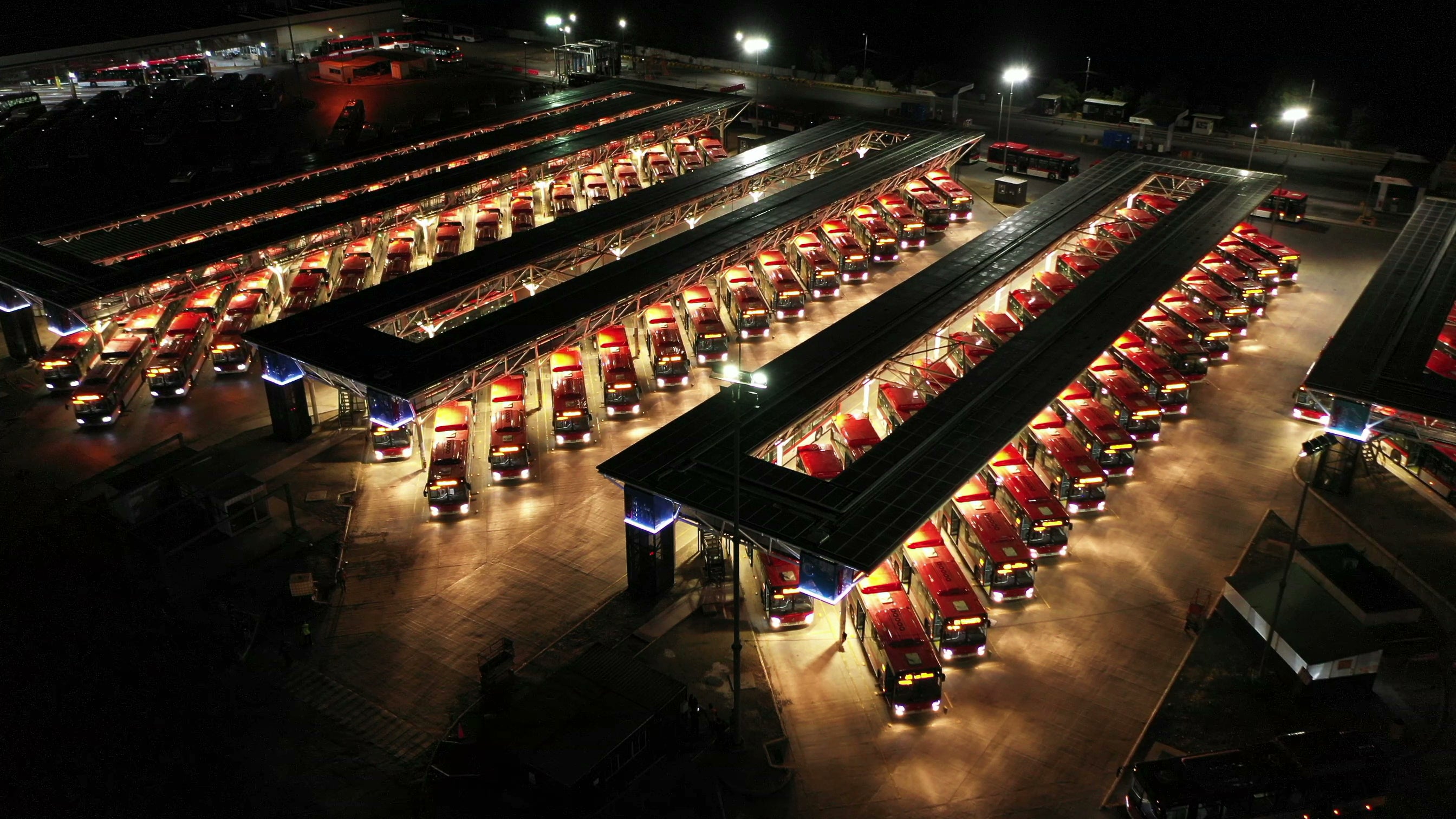
With the El Conquistador electric bus terminal now in operation, there are ten such terminals in the Metropolitan Region, providing power to the 776 electric buses currently circulating in Santiago.
Chile's president, Sebastián Piñera, inaugurated one of the largest electric bus terminals in Latin America this Thursday in Santiago, a key piece of the country's public electric transport network.
The station will feature a fleet of 215 electric buses with a capacity for 90 passengers and a charge that will allow them to travel more than 300 kilometers continuously, which translates into the possibility of transporting more than 600,000 people daily via public transport.
The electric terminal is supplied entirely by clean energy from solar and hydroelectric sources located in the central and southern parts of the country, and it also possesses a self-generation system powered by photovoltaic solar panels, the president added.
This project, which required an investment of 8 million dollars and the hiring of 400 people, will provide employment for more than 200 workers, including electric bus line operators, charging and control system technicians, and maintenance personnel.
Since the announcement of the opening of the first electric bus station in October 2019, a total of 10 electric terminals have been inaugurated and more than 2,220 buses have been incorporated into the network, 776 of which are electric, leaving Santiago, Chile, with the largest fleet of vehicles that do not emit greenhouse gases in Latin America.
The transport system of the Metropolitan Region, which houses the capital, emits more than one million tons of CO2 per year, according to authorities, and this terminal will allow for the saving of 38,000 tons of the gas, reducing the system's emissions by nearly 4%.
"One of the greatest challenges facing humanity is climate change, and we cannot be indifferent to it. We must change the course of history to avoid an ecological catastrophe, and science is giving us the tools to achieve it," concluded Piñera.
The project
- Copec, together with Kaufmann and STP (Servicio de Transporte de Personas), developed the Maipú Electric Terminal Project, one of the largest in the world.
- The electric terminal is supplied entirely by clean energy and also possesses a self-generation system powered by photovoltaic solar panels.
- In terms of users, the electric terminal will reach 600,000 people who travel by public transport.
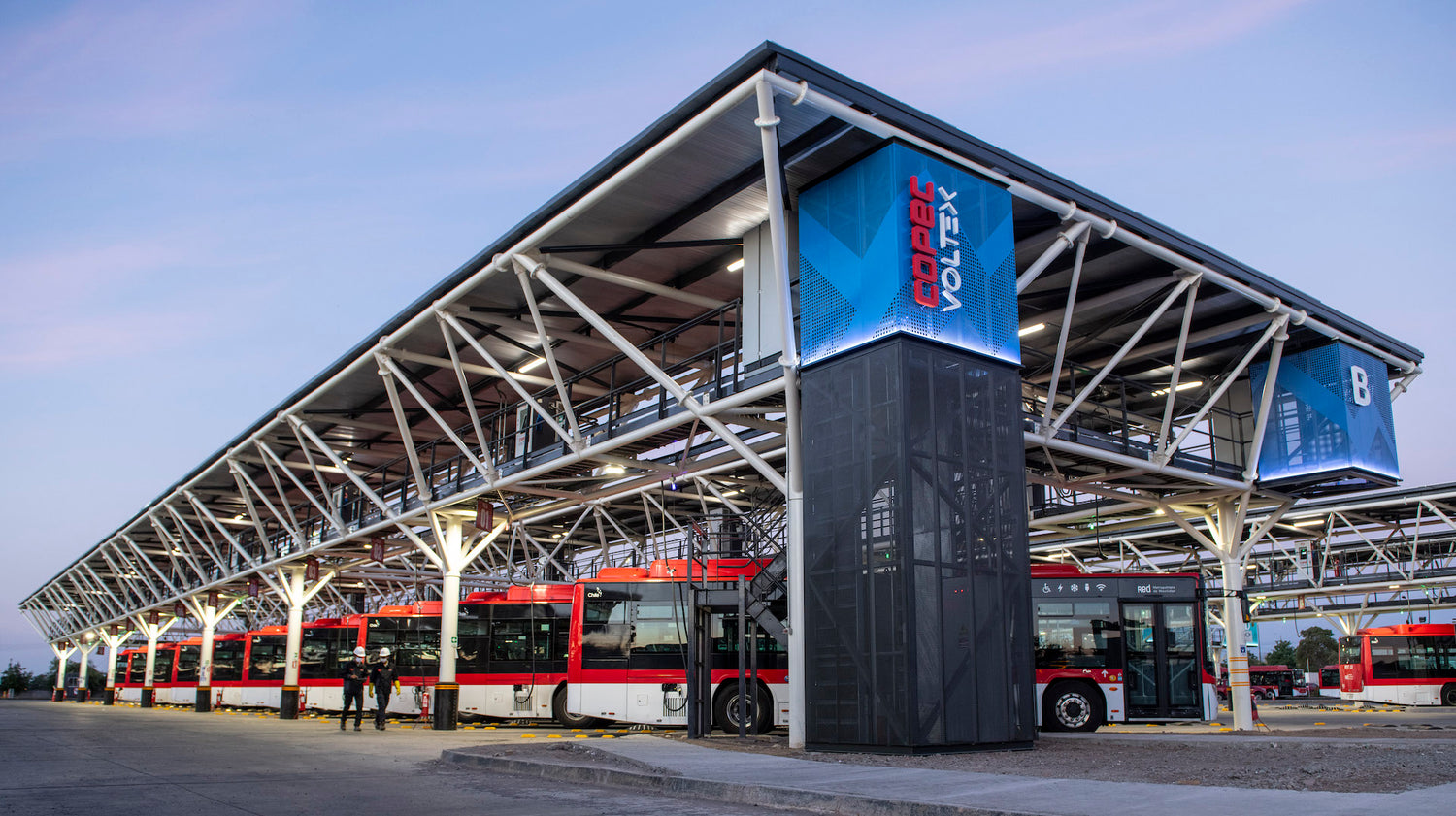
- The terminal has an area of approximately 73,500 square meters, 15,000 of which correspond to the electric terminal, whose infrastructure includes 57 high-power (150kW) Copec Voltex chargers.
- The chargers are located on the second floor of the terminal and have a retractable connector that lowers. This design allows the first level to remain clear, eliminating the possibility of collisions with chargers. This improves safety and facilitates operation and maintenance within the ET.
- The Red! system has a total of 6,700 buses. Of these, 5,900 are diesel buses and 800 are electric buses.
- The 215 electric buses incorporated on this occasion allow for the supply of 25% of the electric buses in the Red! system.
About the buses
- 215 Foton-brand electric buses (Andes Motor, a company belonging to the Kaufmann group)
- Operational autonomy: more than 300 km on a single charge.
- The batteries are latest-generation and are of the CATL brand.
- They have a capacity for 90 passengers and include space for a wheelchair.
- They feature a heated seat for the driver, 6 folding seats, LED lights, an electric defogger, USB chargers, WIFI, an adjustable steering wheel, a 360° camera, air conditioning, and an ergonomic, segregated driver's cabin, as well as passive safety elements.
- They possess an object-detection security system that allows for the recognition of pedestrians, cyclists, and cars, in order to avoid accidents. In addition, they have a 360° camera system that allows for safer maneuvers when parking the buses.
Technological Innovation
- The charging management software developed by Chilean engineers belonging to STP allows for the control, monitoring, and execution of electric bus charging via a mobile device. One of the main advantages of this technological development is that it operationally facilitates the design planning of the electric fleet and, as a consequence, an optimal relationship between the number of buses and the number of chargers.
- Copec integrated all chargers into a single network, which is connected to a data cloud. From this virtual platform, it is possible to manage the chargers in such a way as to determine the energy consumed, generate alerts according to charger status (available, in use, failed), control the power delivered by each connector (or hose) depending on the time or other client needs, among other functions.
Originally published at: https://portalmovilidad.com/copec-voltex-inaugura-la-electroterminal-mas-grande-del-mundo-fuera-de-china/